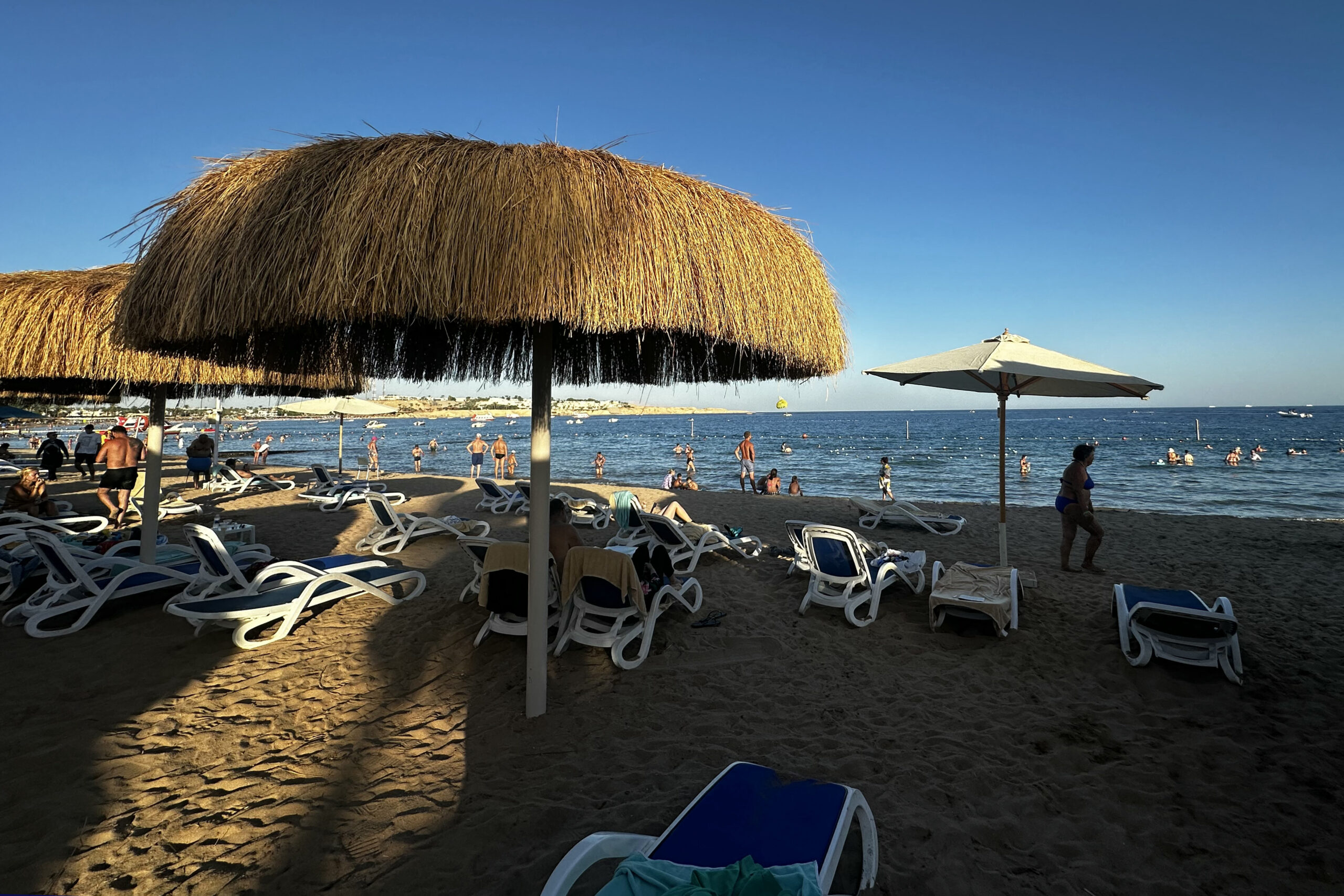
Egypt has been a tourism success story in recent years. Visitor numbers ballooned from 13 million in 2019 to 19 million last year, according to government figures. Tourism helps sustain almost three million jobs and brings more than $15bn a year into the country’s coffers.
The surge in visitor numbers in recent years reflected the growing availability of cheap flights from Europe, as budget airlines and tour operators catered to holidaymakers attracted by Egypt’s year-round sunny climate.
Meanwhile, relative political stability over the past decade has been crucial in convincing tourists that the country is safe to visit.
Conflict concerns
The Egyptian government aims to expand tourist arrivals even further, with a target of reaching 30 million visitors by 2030.
Yet tourism is notoriously sensitive to events beyond host country control – and the conflict in the Middle East is the latest geopolitical headache that threatens Egypt’s ambitions.
Egypt has not come under attack at any point. Unlike its neighbours on the other side of the Red Sea that have been struck by Iranian drones and missiles, Egypt does not host any US military bases, suggesting there is little reason for tourists to be concerned.
But the US Department of State included Egypt in a list of 14 countries from which it issued a “DEPART NOW” alert on 2 March. Before the conflict, Britain and France both advised against travelling to some remote parts of the country, but have not issued any guidance against visiting the main tourist hotspots due to the regional conflict.
Speaking to African Business in late March, before the fragile ceasefire between the US and Iran took effect, Ahmed Youssef, CEO of the Egyptian Tourism Authority, said less than 5% of visitors had cancelled their bookings as a result of the conflict. He insists that Egypt is “completely safe”.
Yet even a 5% cancellation rate would represent a significant blow. And there is some anecdotal evidence that the impact might be more serious. Local media reports suggest a 20-25% decline in hotel occupancy rates compared to last year, while a handful of tour operators proactively cancelled trips at the start of the conflict.
Mohamed Nabil, founder of destination management company Rove World, reports that 70% of his company’s bookings have been cancelled.
Depending on how long the crisis continues, the major concern for the rest of 2026 and potentially into 2027 is that demand for new bookings will be affected by perceived safety fears and by the rising cost and constrained supply of jet fuel.
UK-based budget airline EasyJet has stated publicly that bookings to Egypt are down, with holidaymakers preferring destinations in the western Mediterranean that are more distant from the conflict.
The impact on flight costs will become more severe the longer supplies of jet fuel from the Gulf are impeded. Airlines mostly lock-in fuel costs well in advance by pre-purchasing supplies, although a marked upward increase in widely expected by the end of this year’s summer season.